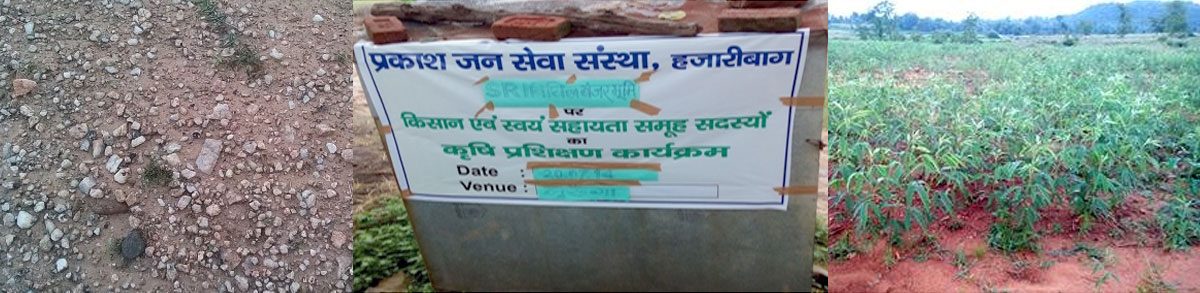
Jharkhand is categorized as plateau region having red laterite soil. Total cultivable area of the state is 38 lakh ha out of which Net Sown Area is only 22.38 lakh ha. Current fallow, other fallow and cultivable wasteland is 18.35 ha. The state has varied climatic regions,: up land, low land and plain land. 1/3rd of the total geographical area is forest and mines of industrial importance. Paddy, maize, pulses, sunflower, groundnut and fruits are main agriculture produces. There is opportunity to bring more land under agriculture in the state as current fallow, other fallow and cultivable wasteland Constitutes 18.35 hect. PJSS has been involved in the waste land development program of DAO, Hazaribag for last several years. In 2013-14, the program was also implemented by PJSS with the objectives to make the waste land usable for agriculture and for increasing the productivity of these waste lands. The project is operational in villages of 02 blocks (Churchu and Barkagaon) of Hazaribag district under which 345.5 hectares of waste lands were used by the farmers to produce Kharif and Rabi crops. During the year, a total of small and marginal farmers were benefited under the program.
Now days, “SRI” and “SWI” methods are being adopted in many states of India including Jharkhand to promote and improve rice and wheat productions. The response of the farmers in Jharkhand is also Overwhelming on these methods. In 2013.14, SRI and SWI methods were promoted by PJSS in the villages of Barhi, Badkagaon and Keredari blocks in Hazaribag district engaging 916 hectares (SRI – 208 hectares and SWI 639) of lads. 1056 (SRI-310 and SWI 755) small and marginal farmers were benefited by it.